English N You | English Courses for AP, GCSE & IB

Blog Details

  • Home
  • /
  • Blog Details
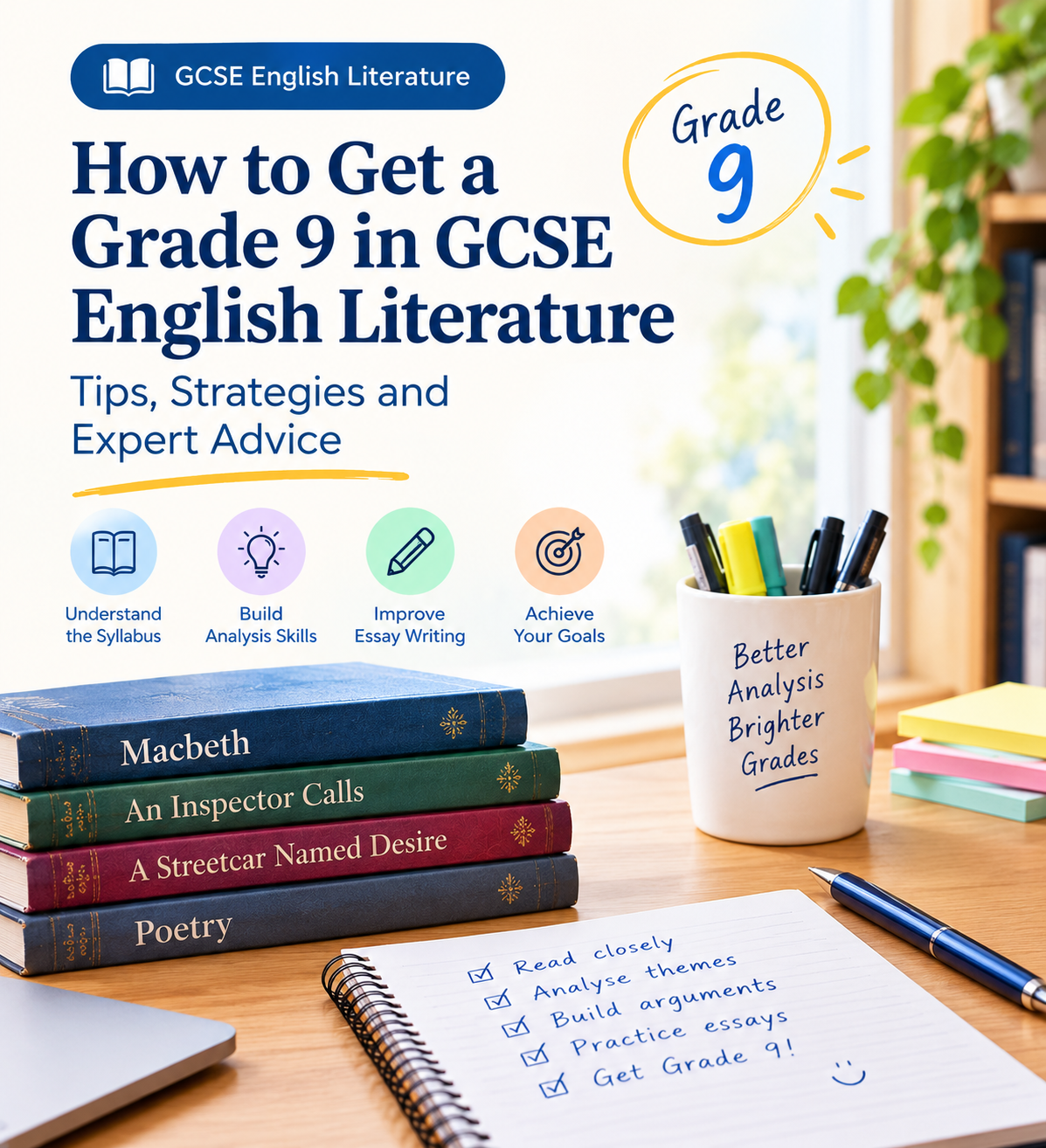
How to Get a Grade 9 in GCSE English Literature

How to Get a Grade 9 in GCSE English Literature

Discover how to achieve a Grade 9 in GCSE English Literature with proven revision strategies, essay-writing techniques, and expert study tips. Learn how to analyze literary texts, explore themes and characters, and develop sophisticated interpretations that help you stand out in exams.

Learn how to structure high-scoring essays, use relevant quotations, analyze language and structure, and explain the writer's intentions. This guide covers effective revision methods, key literary techniques, timed essay practice, and common mistakes to avoid when preparing for your GCSE English Literature exams.


7 Proven Strategies to Achieve Grade 9 in GCSE English Literature

A top GCSE English Literature grade requires more than memorizing quotations. Focus on close textual analysis, clear arguments, thoughtful interpretations, and precise terminology. Practice timed essays, revise key themes and characters, and explain how writers use language, form, and structure to communicate meaning. Adapt your preparation to your exam board's assessment criteria.

How to Get a Grade 9 in GCSE English Literature 7 Proven Strategies to Achieve Grade 9 in GCSE English Literature
Key Points
  • Understand your GCSE English Literature exam board and assessment objectives.
  • Revise key themes, characters, relationships, and context.
  • Memorize short, flexible quotations and analyze them in detail.
  • Explain the effects of language, form, and structure.
  • Write clear thesis statements and develop analytical paragraphs.
  • Practice timed essays and review feedback regularly.
  • Avoid plot summaries and focus on interpretations supported by evidence.
shape-1 shape-2 shape-3
call-action-img
English communication for Business / Professional success

Affordable Your Online Courses & Learning Opportunities
Vocabulary & Grammar development

Mastering corporate communication requires shifting from basic language proficiency to strategic, high-stakes expression. This curriculum empowers ambitious professionals to master executive presence, cross-border negotiations, and persuasive storytelling. By deconstructing the nuances of workplace dynamics, learners transition from standard English to commanding tools for leadership, influence, and global impact.