English N You | English Courses for AP, GCSE & IB

Blog Details

  • Home
  • /
  • Blog Details
How to Use Quotations and Evidence in Literary Analysis

How to Use Quotations and Evidence in Literary Analysis

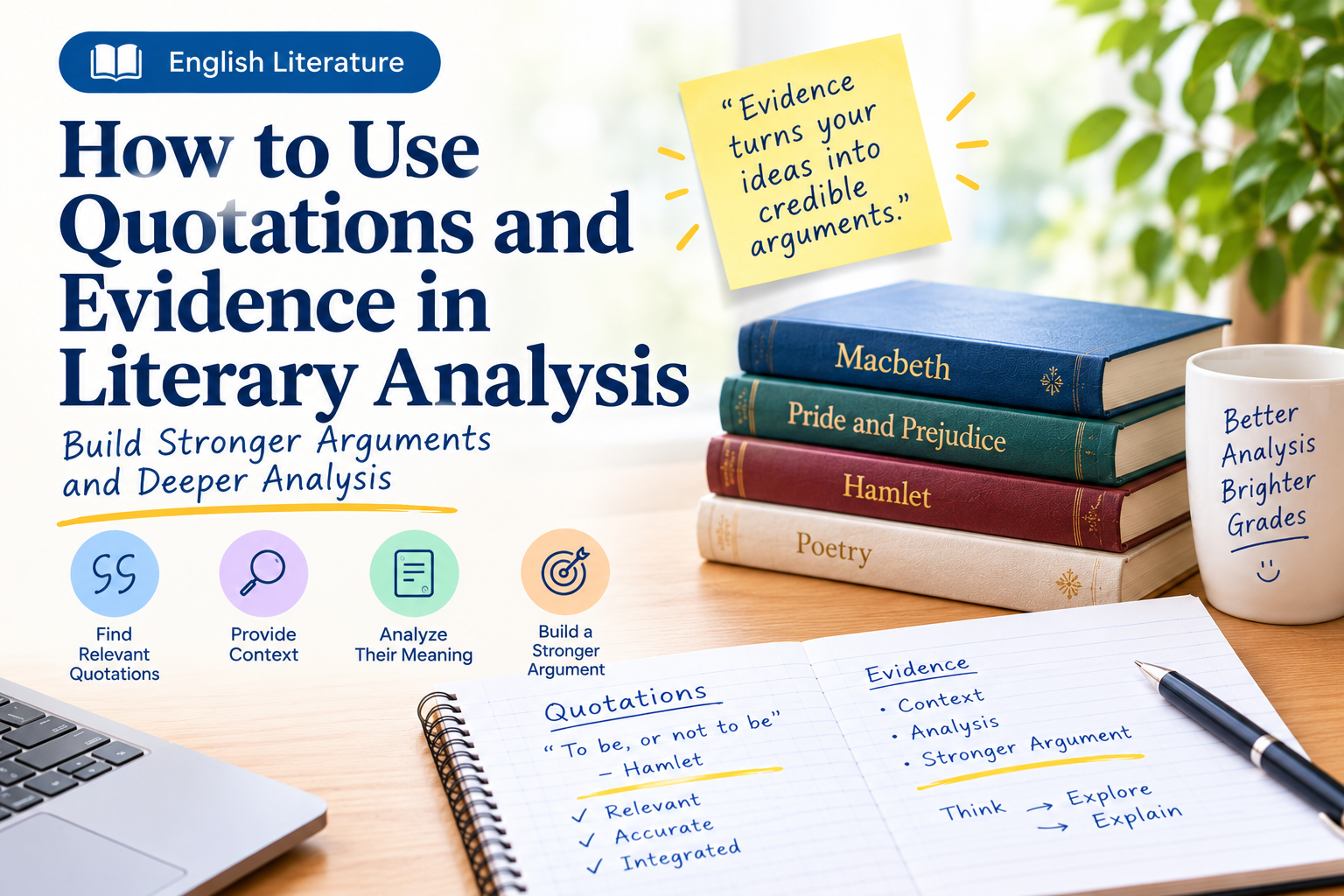
Learn how to use quotations and textual evidence effectively in literary analysis. Discover how to select relevant quotations, integrate them smoothly into your essays, and explain how they support your interpretation. This practical guide helps students develop stronger arguments and write more analytical English literature essays.

Explore practical examples of quotation analysis, learn how to connect textual evidence to themes and character development, and avoid common mistakes such as dropping quotations into paragraphs without explanation. Whether you are preparing for GCSE, IGCSE, AP English, or IB English, these techniques can help you produce clearer, more convincing literary arguments.


How to Analyze Quotations: Examples and Essay-Writing Tips

Strong literary analysis does more than include quotations: it explains why the evidence matters. Introduce each quotation with relevant context, examine specific words or literary techniques, and connect your analysis to the essay question. Use a clear point, supporting evidence, and detailed explanation to build paragraphs that demonstrate thoughtful interpretation rather than simply retelling the story.

How to Use Quotations and Evidence in Literary Analysis How to Analyze Quotations: Examples and Essay-Writing Tips
Key Points
  • Choose short, relevant quotations that directly support your argument.
  • Introduce quotations with enough context for the reader.
  • Integrate quotations naturally into your own sentences.
  • Analyze specific words, imagery, tone, and literary techniques.
  • Explain how the evidence supports your interpretation.
  • Connect each quotation to the essay question and wider themes.
  • Avoid unexplained quotations and excessive plot summary.
shape-1 shape-2 shape-3
call-action-img
English communication for Business / Professional success

Affordable Your Online Courses & Learning Opportunities
Vocabulary & Grammar development

Mastering corporate communication requires shifting from basic language proficiency to strategic, high-stakes expression. This curriculum empowers ambitious professionals to master executive presence, cross-border negotiations, and persuasive storytelling. By deconstructing the nuances of workplace dynamics, learners transition from standard English to commanding tools for leadership, influence, and global impact.